
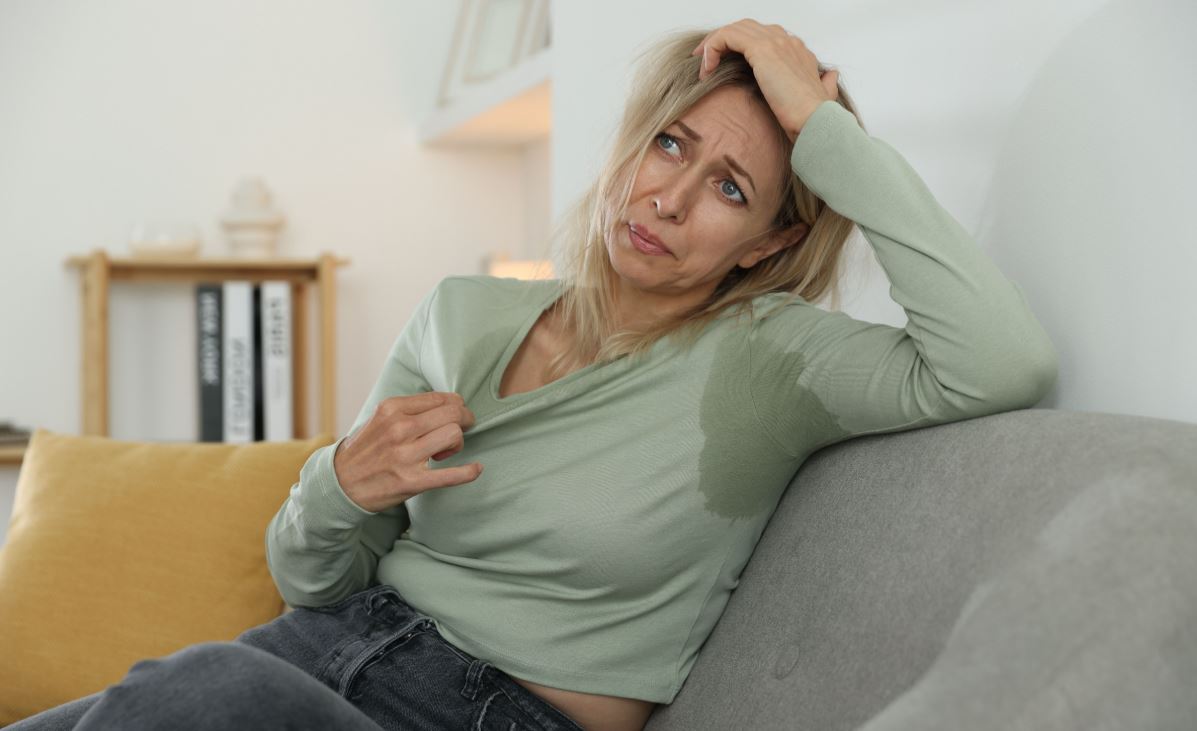
It’s September… So why does it still feel like mid-July?
If you live in Dallas, you already know the Texas heat lingers well into fall. But what if the intense heat you are feeling isn’t actually coming from outside?
Are you experiencing sudden hot flashes when everyone else in the room seems completely comfortable? Waking up drenched in sweat even though the bedroom is cool? Feeling as if your body has its own internal thermostat and someone keeps turning it up?
For many women, the answer has less to do with the seasonal forecast and far more to do with what’s happening inside the body.
When the Heat Isn’t Coming From Outside
Hot flashes and night sweats are clinically known as vasomotor symptoms and they are among the most common symptoms associated with the perimenopause and menopause transition.
A hot flash often arrives without warning, triggering an intense wave of heat across the face, neck and chest. Sweating typically follows, often accompanied by chills as your body attempts to cool itself down. When these episodes occur during sleep, they are commonly referred to as night sweats.
And they are rarely triggered by a hot room alone.
During perimenopause and menopause, changes in estrogen can affect the brain’s temperature-regulation system. The range of temperatures the body can tolerate before triggering a cooling response may become narrower, so even small changes in core temperature can bring on a sudden wave of heat.
This can make symptoms feel unpredictable. You might be sitting comfortably in an air-conditioned office when a wave of heat suddenly comes over you, or you may wake up drenched in sweat even though your bedroom is cool.
The frequency and severity of these episodes vary from woman to woman. While some experience occasional flushing, others manage frequent daily disruptions that persist for years.
A major longitudinal study from the Study of Women’s Health Across the Nation (SWAN), published in JAMA Internal Medicine, found that frequent vasomotor symptoms lasted a median of 7.4 years overall. For women who reached their final menstrual period, symptoms persisted for a median of 4.5 years afterward.
When these episodes repeatedly disrupt your sleep, the impact can extend far beyond temporary physical discomfort. Fragmented sleep leads to chronic fatigue, brain fog, mood fluctuations and lower daily resilience.
It’s Not Always “Just Menopause”
While hot flashes and night sweats are strongly linked to hormonal changes, not every episode of overheating should automatically be written off as menopause.
Several factors can influence sweating or changes in body temperature, including thyroid disorders, certain medications, underlying health conditions, alcohol, caffeine, stress and environmental temperature.
This is why persistent, new, or severe symptoms deserve a comprehensive conversation with a physician. The objective is never simply to label a symptom. It is to understand why your body is reacting this way and identify the underlying cause.
Restoring Internal Balance
If thermal regulation issues are interfering with your daily life or sleep quality, you do not have to simply wait for them to pass. Talking with a healthcare provider can help determine what is contributing to your symptoms and identify the right path forward.
When changing hormone levels are driving your symptoms, Bioidentical Hormone Replacement Therapy (BHRT) offers a targeted approach to managing perimenopause and menopause symptoms. BHRT utilizes hormones that are chemically identical to those your body naturally produces. Because these protocols are carefully customized to your lab work and monitored by a physician, BHRT provides a thoughtful, well-tolerated way to help restore your body’s natural balance.
At CornerstoneMD in Dallas, we take the time to understand your symptoms and health history to help determine the right treatment approach. If you’re seeking relief from persistent hot flashes, night sweats or other menopause symptoms, schedule an appointment with us to discuss your options.
References
- Avis NE, Crawford SL, Greendale G, et al. Duration of Menopausal Vasomotor Symptoms Over the Menopause Transition. JAMA Internal Medicine. 2015;175(4):531-539. doi:10.1001/jamainternmed.2014.8063.
- Huang AJ, Faubion S, Grady D. Nonhormonal Treatment of Menopausal Vasomotor Symptoms. JAMA Internal Medicine. 2025;185(7):874-875. doi:10.1001/jamainternmed.2025.0990.
- National Institute on Aging. What Is Menopause? National Institutes of Health.
- National Institute on Aging. Sleep Problems and Menopause: What Can I Do? National Institutes of Health.
- American College of Obstetricians and Gynecologists. Compounded Bioidentical Menopausal Hormone Therapy. Clinical Consensus No. 6. Obstetrics & Gynecology. 2023;142:1266-1273. Reaffirmed 2026.